GOSA IN THE MEDIA
Symposium zooms in on matters giving impetus for the grain road ahead
The export of agricultural products is one of the few means that still makes a positive contribution to growth in the country’s economy. Grain is an integral part of the value chain of agriculture and still keeps South Africa’s doors open, said Hein Rehr, president of the Grain Handling Organisation of Southern Africa (GOSA) at the organisation’s 38th symposium in Mossel Bay.
“Agriculture alone is not going to bring the country back to where it was. The private sector will have to intervene drastically and hands will have to be joined with organised agriculture so that the economy can begin to perform again. The harder it gets, the more we have to talk and the more things we will have to do together,” said Rehr.
The symposium – during which the organisation’s 40th anniversary was also celebrated – was presented at the Diaz Hotel in Mossel Bay on 15 and 16 March. This was preceded by an informal golf day at Mossel Bay Golf Club on 14 March and a business breakfast with Pieter-Louis Myburgh, award-winning investigative journalist and author, on 15 March. A ladies programme was presented concurrently with the symposium.
The theme and programme put the spotlight on which aspects are necessary to provide impetus to the grain industry in a post-pandemic era. Independent energy analyst, Chris Yelland, was the keynote speaker. Other speakers included Dawie Maree (FNB Agriculture), Dr André van der Vyver (SACOTA), Japie Snyman (Olam Agri). Dr David Molapo was the motivational speaker. Three grain-specific breakout workshops were led by Wayne van Vuuren (Massamatic), Willem Strauss (RMB) and Jackie Goodwin (SABT).
The new normal
According to Chris Yelland, load shedding should not be accepted or become the new normal for South Africa. Commitment by all large, medium and small stakeholders can ensure that loadshedding ends within two years of being given the green light to proceed with alternative solutions. “Customers, including those in the agricultural sector, should take ownership of their energy future and become part of the solution. A total blackout is very unlikely. Several steps can be taken to prevent this,” he said.
Agriculture is getting stronger
“South African agriculture survived economic setbacks in and after the Covid-19 pandemic and performed 25% better in 2022 than in 2019. This makes agriculture one of the few industries that was able to achieve this,” said Dawie Maree. He reckons that agriculture will have to adapt to survive: “We have to decide who we want to be. We need to stay relevant, adapt to stay in the market and stay informed. Focus on what you can control. Don’t look the other way if there is a problem. Be innovative and use what you can control and afford.”
Export remains important
“Soybeans were not – like white maize – exported before, but since the production exceeds the demand, soybeans are also exported. The export market is extremely important to stimulate and grow the South African agriculture and economy. That’s why every aspect of exporting products is important to maintain profitability,” said Dr André van der Vyver. He also pointed out that the standardization of the unloading capacity of JSE-approved silos is necessary to place a price on the economic value of the grain in the silo.
SA and the export market
According to Japie Snyman, with its ability to export 350 000 to 400 000 tonnes of grain per month, South Africa is a small player in the world economy, but still competes with the best in the world. The international export market is very competitive, but South Africa’s biggest advantage is its location.
“South Africa is in a good position with a great advantage of resilience. Producers can make plans and do well, even if the infrastructure is a challenge. If we constantly produce more and process and consume ourselves, there are many benefits,” he added.
Roundtable discussion
A highlight was a roundtable discussion with the speakers led by Lourensa Eckard from In Gesprek on kykNET. Matters such as how to make the export of agricultural products more efficient, how banks assist consumers of electricity to get renewable energy, and the influence of load shedding and how to solve the problem were discussed. More than one panellist mentioned the importance of conversation and networking platforms, such as those provided by the GOSA Symposium.
GOSA would like to thank Bessemer Africa as main sponsor of the symposium.

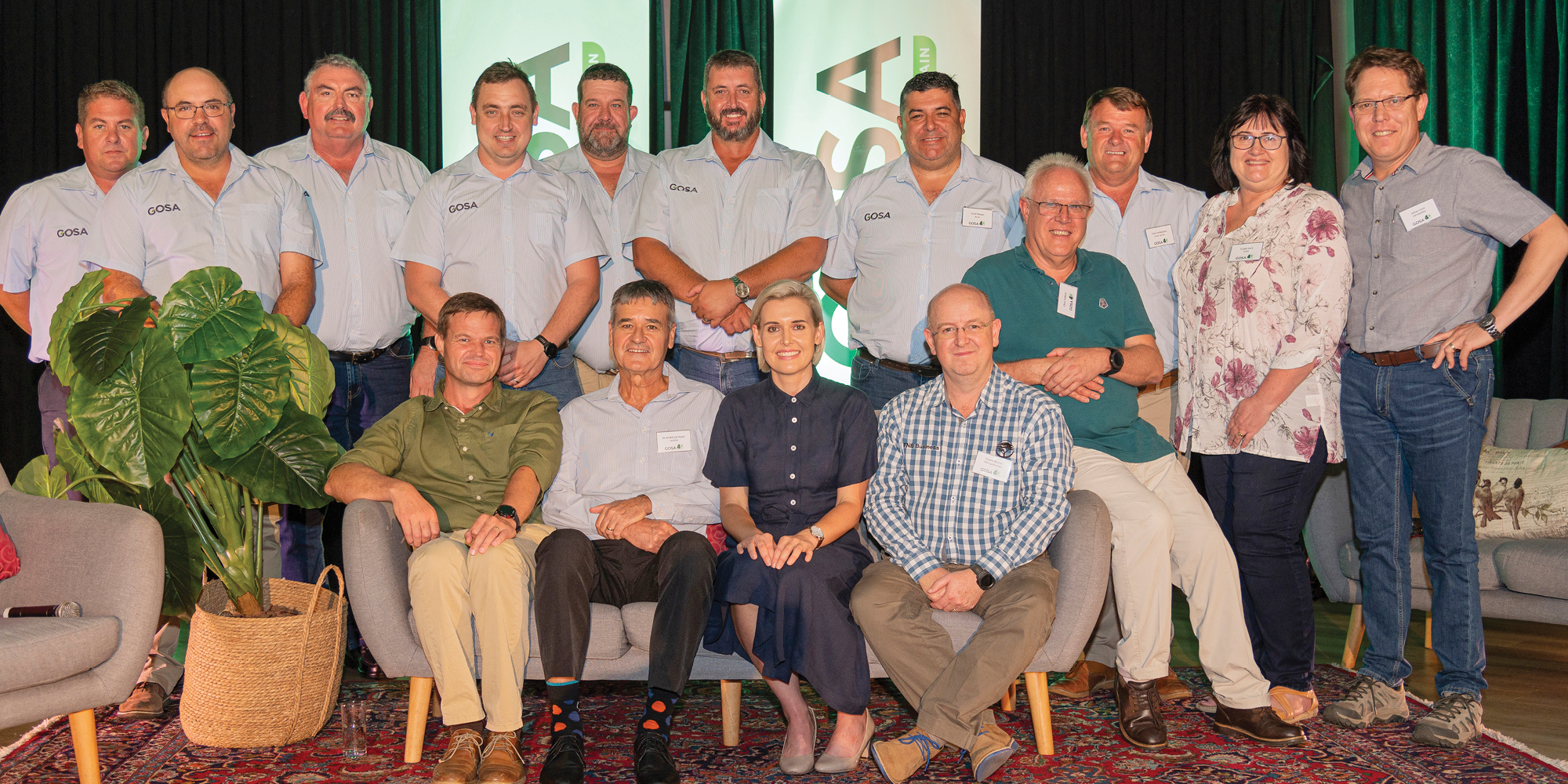
The members of the panel discussion led by Lourensa Eckard from kykNET (middle), were from the left: Japie Snyman (Olam Agri), Dr André van der Vyver (SACOTA), Dawie Maree (FNB Agriculture) and the independent energy analyst, Chris Yelland (EE Business Intelligence).
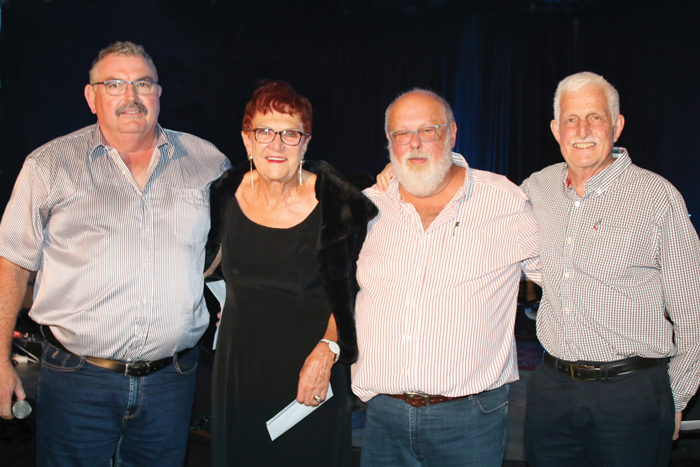
During the 40-year gala dinner, recognition was given to former board members of GOSA who attended the symposium. Here is Hein Rehr (president) with Annatjie Loio (former president), De la Rey Knoblauch (former board member) and Carl Geldenhuys, a founding member of the organisation.
ENDS
ISSUED ON BEHALF OF THE GRAIN HANDLING ORGANISATION OF SOUTHERN AFRICA (GOSA) BY INFOWORKS ON 29 MARCH 2023.
WWW.GRAINORGSA.CO.ZA
Enquiries: Hein Rehr, president of GOSA
Cell: 082 451 1569
hein@newachiever.net
Media enquiries: Johan Smit, Infoworks
Tel: 018 468 2716
Cell: 082 553 7806
johan@infoworks.biz
PRESS RELEASES
Symposium 2024

Bessemer Africa
Main sponsor

Afgri
Platinum sponsor

Stargate Scientific
Platinum sponsor

Rand Merchant Bank
Platinum sponsor

AGI
Platinum sponsor

Envu
Platinum sponsor

Bester Feed
Diamond sponsor

Techmac
Diamond sponsor

Milling Spares
Diamond sponsor

Klerkscale
Gold sponsor

Henchem
Gold sponsor

Massamatic
Gold sponsor

Avima
Gold sponsor

Ronin
Silver sponsor

VKB
Silver sponsor

Cargill
Silver sponsor

Overberg Agri
Silver sponsor

AE Solutions
Silver sponsor

SABT
Silver sponsor

Ensign
Silver sponsor

NWK
Silver sponsor

National Fumigants
Silver sponsor

4PL.Com
Silver sponsor

Nu-Pro
General sponsor

OVK
General sponsor

Buhler
General sponsor

Schoeman
General sponsor

RehrCo
Wine sponsor: Gala Dinner
Symposium 2023 presentations
GOSA Symposium 2023
SYMPOSIUM

WELCOME EVENING

BUSINESS BREAKFAST

INFORMAL GOLF DAY

SPEAKERS

40-YEAR GALA EVENT

EXHIBITORS

LADIES PROGRAMME